Mid-scroll, I stopped. Really. Here’s the thing.
Whoa! The first time I used Solscan I felt a little lost. Seriously? The UI was cleaner than I expected. My instinct said the tool would be clunky, slow, bloated. Actually, wait—let me rephrase that: I expected an explorer that looked like a ledger on steroids, but Solscan surprised me with focused design and speed. On one hand it feels powerful; on the other, it’s somehow honest and lean, though actually it hides a lot of depth behind simple clicks.
Okay, so check this out—when you paste a transaction signature into the search box you get instant clarity. Short summary up top. Medium-level detail below. Then, if you want, deep technical logs and inner instructions that show how tokens moved through programs and accounts, which is exactly what you need when somethin’ confusing happens on-chain. Hmm… sometimes I still dig into the raw logs because the UI abstraction can mask subtle state changes. Initially I thought explorers were mostly for curiosity, but then I realized they’re troubleshooting tools for traders, devs, and auditors alike.
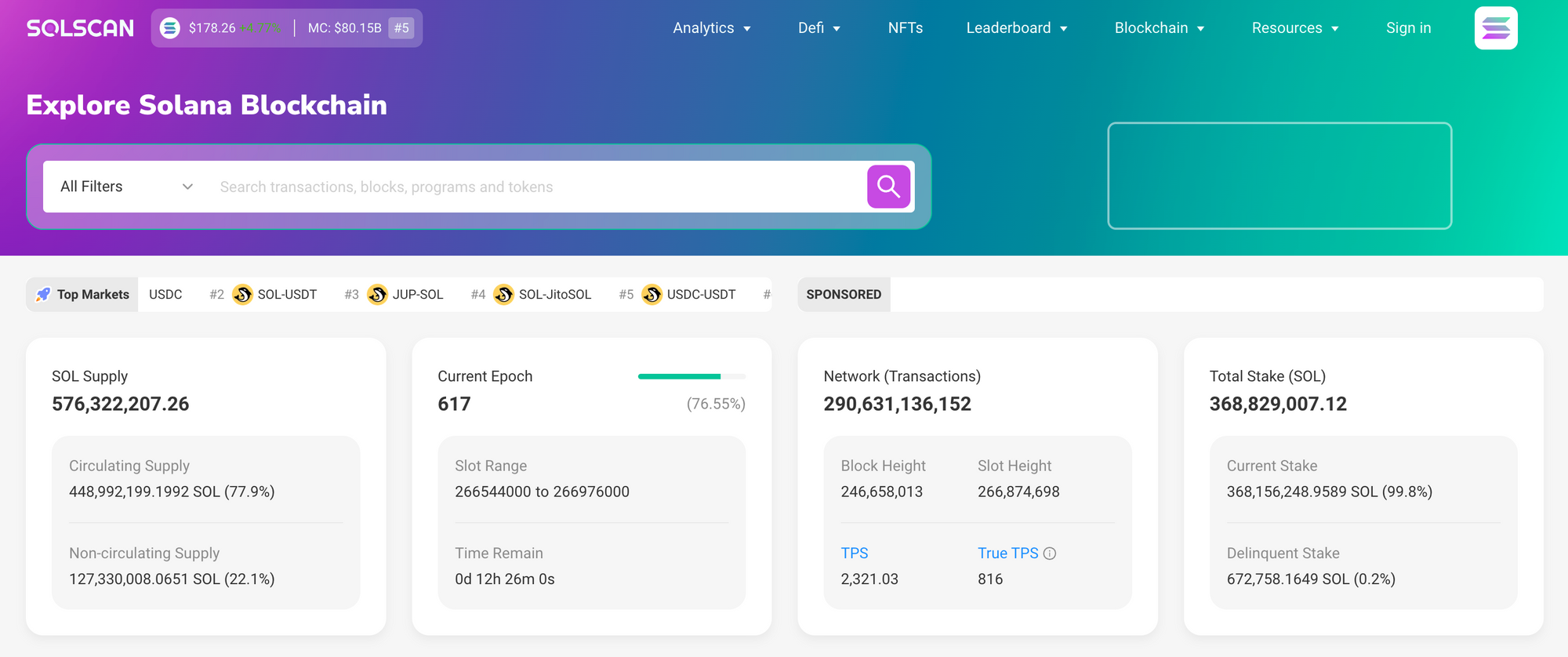
A quick recommendation — the real solscan explorer link
If you want to try it right away hit the official site: solscan explorer. It loads fast even during spikes. I live on the East Coast and during busy market hours the difference is noticeable. Transactions render quickly and the filters don’t hang — little conveniences that quietly matter.
One complaint I have (and I’m biased, but it bugs me): some analytics panels feel like they assume you already know Solana’s account model. The learning curve is real for newcomers. Yet the search and token pages do a solid job of surfacing balances, holders, and recent transfers without making you feel dumb. There are charts for trade volume and token distribution, and the NFT pages often include metadata previews which save time — you don’t have to jump between sites. On the other hand, cross-referencing with marketplace data sometimes requires extra clicks (oh, and by the way… I wish they’d standardize some of the previews).
Here’s roughly how I use it in daily flow: quick sanity check, then drill down if numbers don’t align. Short checks first. Longer investigative sessions when things look off. When a swap goes sideways or a program behaves oddly, Solscan gives me the breadcrumbs — inner instructions, compute units used, invoked programs — so I can reconstruct the story. Initially I thought a block explorer was just a history log, but actually—it’s forensic evidence.
For developers the program details are especially useful. You can see which accounts a transaction touched and the exact instruction data if you need it. That matters when you’re debugging CPI (cross-program invocation) chains or tracing why state didn’t update. I’m not 100% sure about every parsing rule Solscan uses for newer program types, but they iteratively add support, and community feedback moves things along. Developers often paste binary instruction data into parsers; Solscan’s decoding saves a few steps and a lot of guesswork.
Security folks like the address clustering and label features. Labels give quick context — project names, bridges, common wallets — and that helps spot risks faster. If an address suddenly receives a large inflow from a known risky bridge, you see it and can react. The thing is, labels are community-driven, so take some with a grain of salt. On one hand they speed decisions; though actually you should always cross-check before acting on them.
Tokenomics researchers will appreciate holder breakdowns and distribution charts. They’re not fancy machine-learning outputs, but they’re practical. For instance, you can quickly see if a token’s supply is concentrated in a handful of wallets or broadly distributed. That often predicts volatility. I noticed many memecoins had extreme concentration, and that correlated with pump-and-dump behavior. Honestly, this part bugs me because casual users don’t always get that risk hint — except Solscan lays the data bare if you look.
Community features are subtle but important. Comments on transactions. Known project tags. Those micro-context signals are human and imperfect, but they help. Sometimes you’ll find a note like „bridge tx” or „airdrop” that clarifies a weird transfer without having to hunt Twitter threads. There are quirks though — duplicate labels, slightly outdated tags — typical crowd-sourced noise. Still, better than nothing.
On UX: keyboard shortcuts are modest but welcome. The search history is a tiny hero feature for me; I bounce between wallets and signatures and it keeps the thread. Mobile web is usable, not stellar. I often open quick links on my phone to confirm a transfer while commuting, and Solscan behaves decently. I prefer desktop for deep dives.
Pricing? Mostly free. The public interface covers the vast majority of needs. There are advanced dashboards and some API endpoints that can be rate-limited or behind commercial tiers, which makes sense. If you’re running heavy monitoring or programmatic checks you might need a paid plan or to host your own indexing node. On the other hand, casual users get a whole lot for zero dollars.
Okay—practical tips before you go poking around and getting lost: copy transaction signatures from your wallet notifications and paste them directly. Use the „inner instructions” view when a transaction includes multiple program calls. Check the compute units when a transaction fails; it often hints whether a limit was hit. And when you see a token with weird decimals, check the mint account metadata — sometimes marketplaces misread metadata and prices appear off.
Something felt off about some token metadata recently (tiny detail, but it matters for listings). I dug in, found a mismatch between on-chain metadata and the marketplace, and it explained price discrepancies. My instinct said there’s always a story behind strange numbers. Follow that thread.
FAQ
What makes Solscan different from other explorers?
Speed and focused depth. It balances quick readability with access to deep logs and instruction parsing. Some explorers prioritize visuals or analytics; Solscan leans into practical clarity and fast lookups, which is handy under pressure.
Is the data trustworthy?
Generally yes — it’s pulled from the Solana network. Labels and community tags are fallible though, so cross-check before making high-stakes moves.
Any tips for new users?
Start with transaction signatures and token pages. Use the search bar like a command line. Don’t ignore inner instructions — they explain the how. And be curious: explorers are the closest thing to on-chain truth you’ll find.